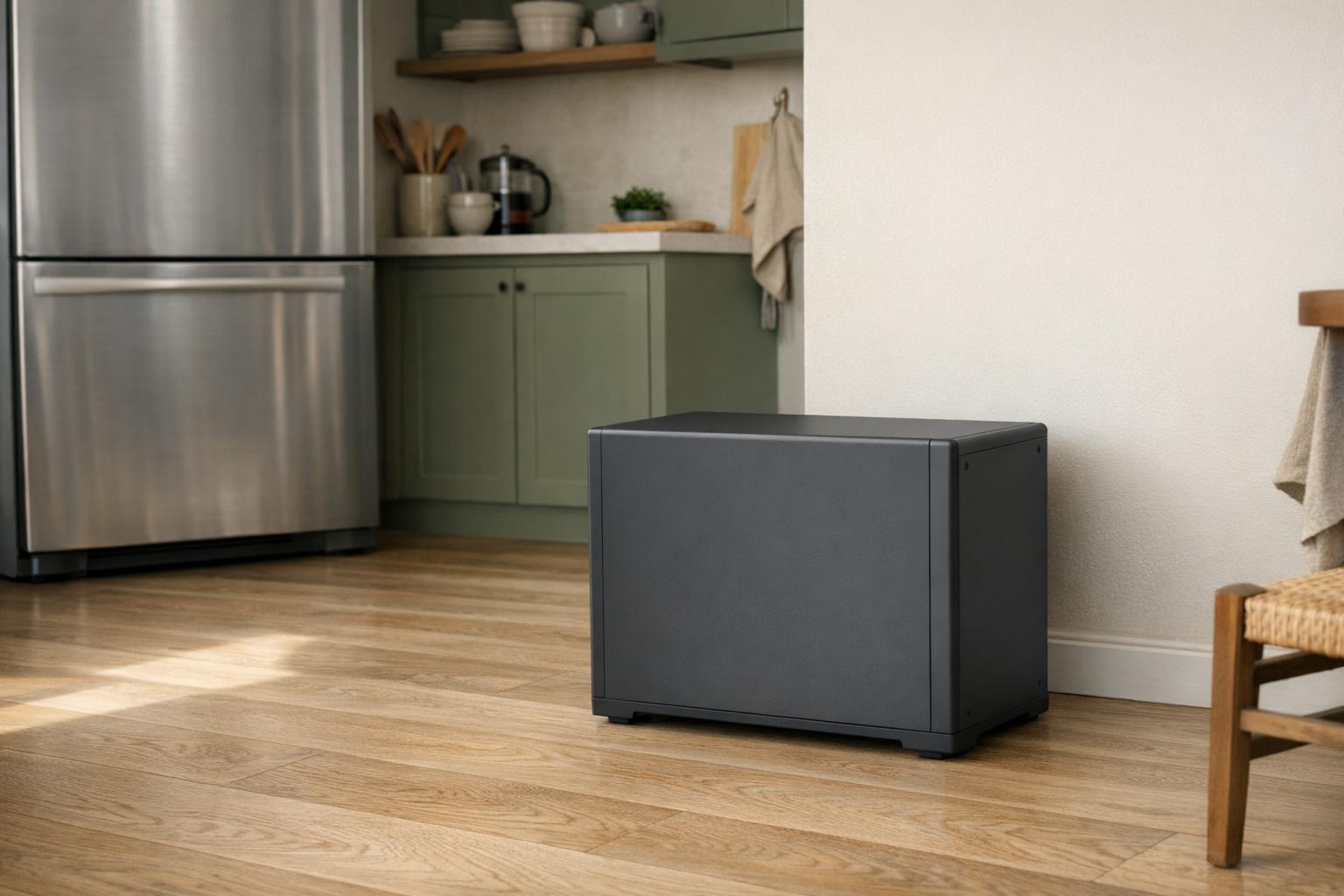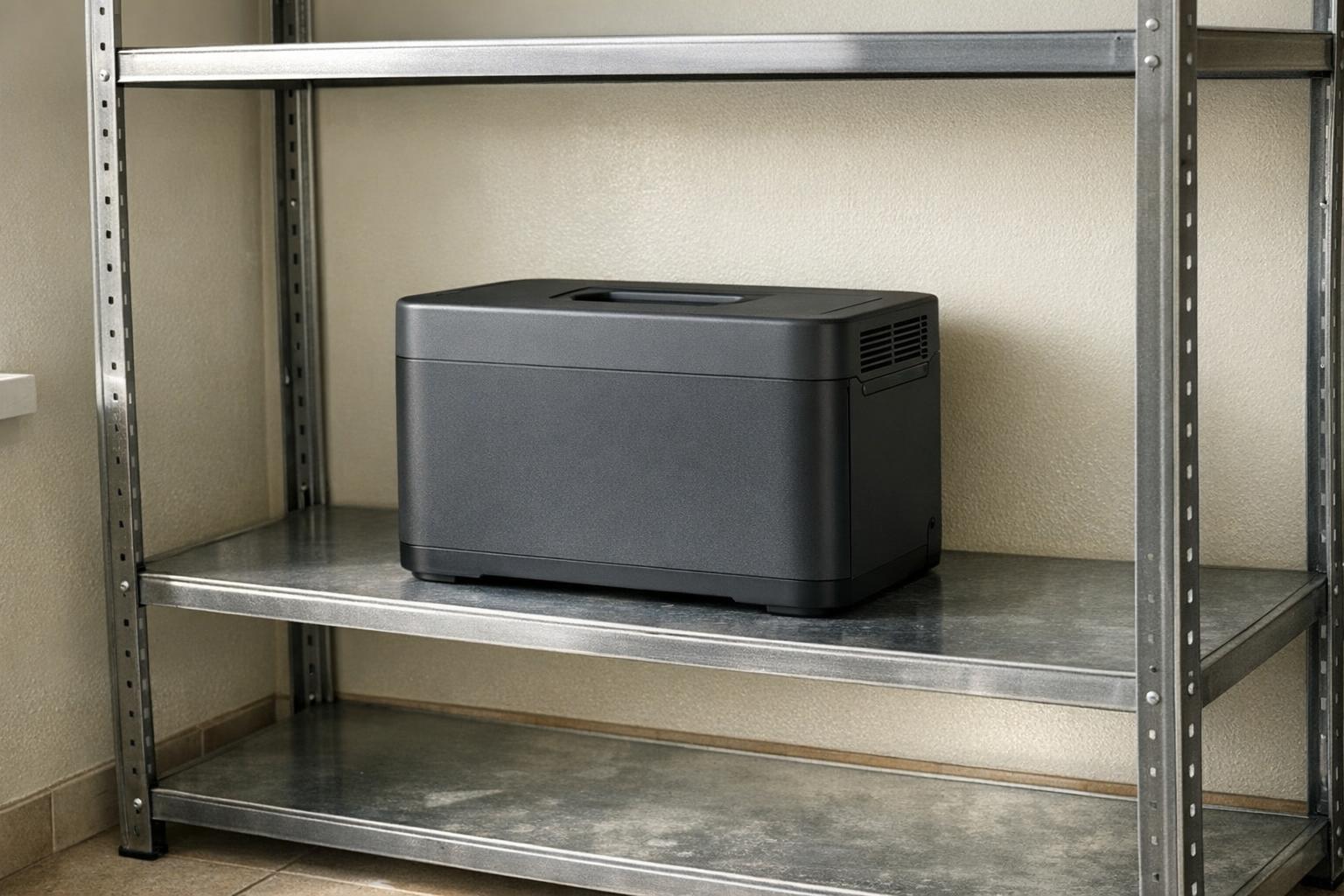
A portable power station is useful only inside a broader outage plan: essential loads, safe placement, a realistic energy budget, and a fallback when power runs low. Prepare those decisions before the lights go out. This guide covers supported plug-in loads, not home electrical installation or medical backup.
Begin with household priorities
Write a short list of the services you want to preserve: communication, permitted lighting, and ordinary household refrigeration where the equipment is compatible. Separate necessities from conveniences. Decide who will operate the station and where the written instructions will be kept. The goal is a plan another household member can follow without understanding every specification.
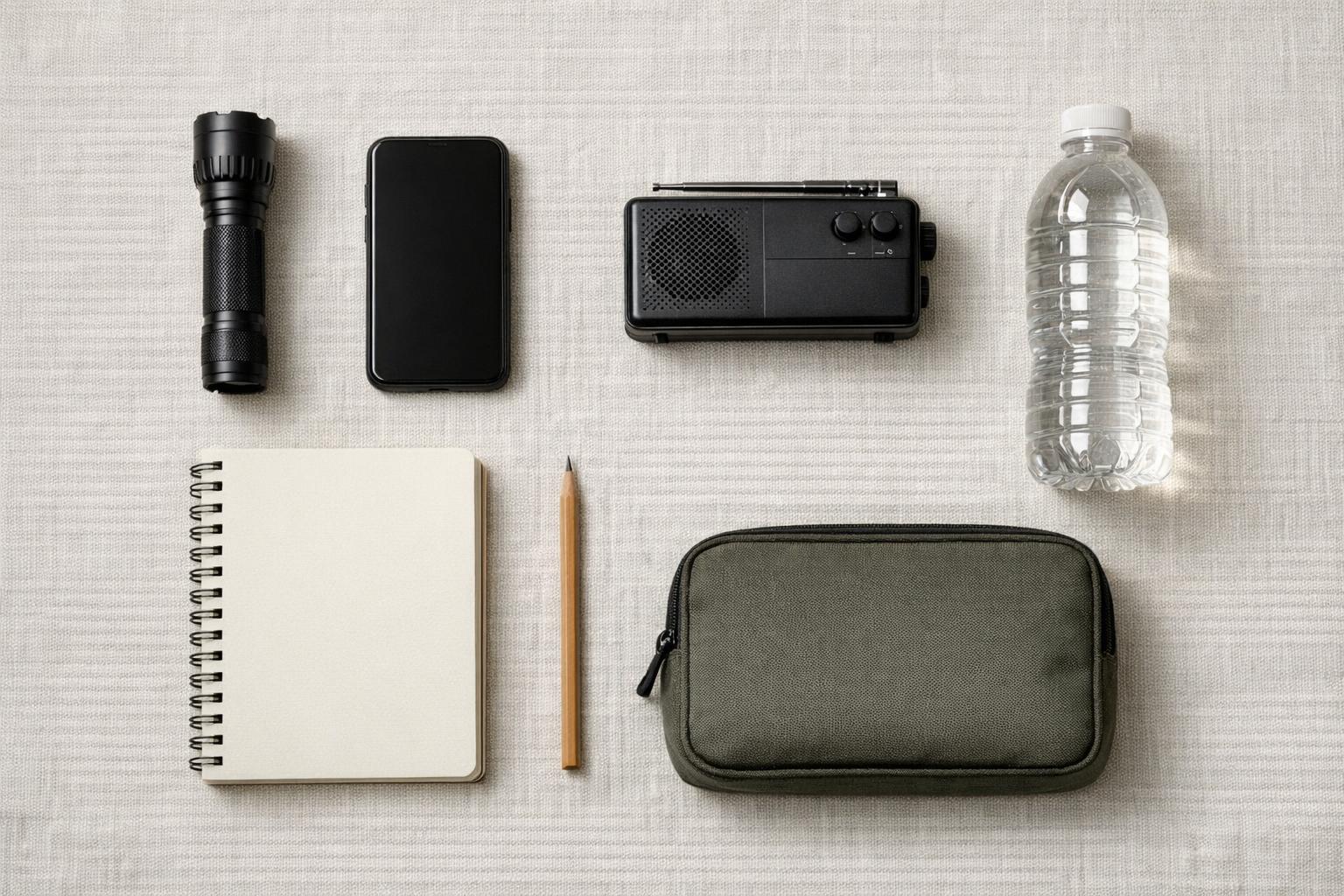
CPSC recommends preparing before storms by testing smoke and carbon monoxide alarms, reviewing generator safety instructions, and ensuring supplies include batteries, flashlights, and working backup equipment. A power station does not replace those supplies or an evacuation plan. Make the battery one tool within the response, not the response itself.[6]
Confirm each supported load
Use the appliance's documentation and the exact station manual to check electrical requirements, continuous output, starting needs, and port limits. For a refrigerator, follow the refrigerator backup guide rather than assuming every kitchen appliance fits a generic wattage allowance. EcoFlow's manuals distinguish AC output from individual DC and USB limits, illustrating why the actual port matters.[2]
Keep the scope to equipment explicitly supported by both manufacturers. Do not recommend a general-purpose station for life-sustaining equipment. If household medical needs depend on electricity, arrange a separate plan with the relevant clinicians, equipment provider, and emergency resources rather than relying on this shopping guide.
Write an energy budget and a load-shedding order
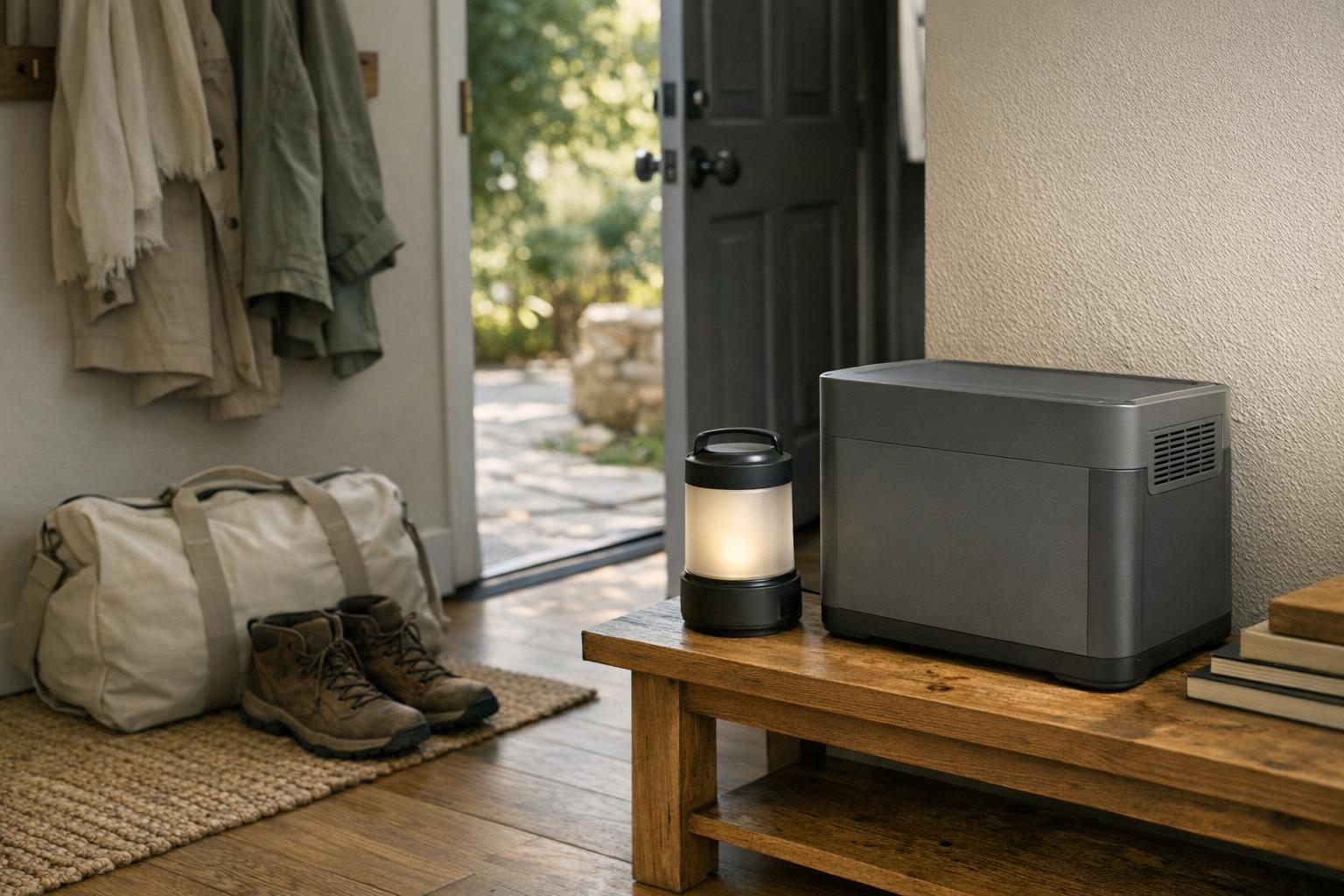
Watts measure power at a moment; watt-hours measure energy used over time. Use those units separately, as EIA explains. Estimate the energy needed for the planned interval, label assumptions, and decide what reserve you want to maintain. Our runtime guide gives the arithmetic without treating a hypothetical usable fraction as a tested specification.[1]
Write down which optional loads to stop first and what action to take if energy is lower than expected. Do not wait for a nearly empty display to negotiate priorities. A changing estimated runtime is a cue to revisit the plan, not a guarantee that the remaining household needs will be covered.
Prepare equipment and placement before the event
Keep the approved charger and device cables with the station, inspect their condition, and learn the physical controls. Follow the manual's charging instructions and use a permitted location with the required ventilation and protection from water. EcoFlow prohibits damaged cables, blocked heat dissipation, and self-modification; those restrictions remain in force during an emergency.[2]
Never connect a power station's output to a household wall receptacle to energize building wiring. If you want circuit-level backup, have a licensed electrician specify approved equipment and installation. This guide deliberately provides no backfeed, transfer-equipment wiring, or panel-connection procedure. A battery's portability does not make improvised house wiring acceptable.
Decide whether automatic transfer is actually required
Manually charging devices after an outage is different from keeping a load operating through the transition. If automatic backup matters, confirm the exact model's transfer behavior and supported application. EcoFlow's RIVER 3 manual assigns different EPS and UPS specifications to named variants and warns that the standard variants are not for devices requiring uninterrupted power.[4]
Use the EPS and UPS guide to review transfer, bypass, and settings. Also check output timeout for intermittent loads: EcoFlow warns that refrigerator quiet periods can trigger idle-output behavior on supported stations. Document the settings appropriate to your exact model rather than relying on an app menu you last saw months ago.[2]
Keep battery and fuel-generator rules distinct
A battery power station is not a fuel-burning generator, and a bundle called a solar generator does not justify applying combustion equipment rules indiscriminately to batteries. Follow the battery manufacturer's indoor or outdoor placement instructions. NFPA nevertheless warns that lithium-ion batteries can catch fire or explode when damaged or improperly used, charged, or stored; battery power is not risk-free.[3]
If you also use a fuel-burning portable generator, CPSC says never to run it inside homes, garages, basements, crawlspaces, sheds, or other enclosed areas, even with doors or windows open. CPSC specifies outdoor operation at least 20 feet from homes and buildings, with exhaust away from openings. Charging a battery from a generator does not remove that generator's carbon-monoxide hazard.[6]
Make recharge and fallback plans realistic
Identify approved charging opportunities and when they may be available. For solar, confirm the exact panel, cable, and electrical match using the solar checklist. EcoFlow documents weaker output under poor sunlight and shading, so a forecast storm is not a reason to assume uninterrupted solar replenishment.[7]
Decide in advance when you will stop optional use, seek another safe location, or follow emergency instructions. If equipment has been flooded, do not treat restored utility service as permission to use it: CPSC warns against touching wet appliances still connected to power and calls for qualified inspection of affected home systems. Personal safety takes priority over recovering stored energy.[6]
Rehearse, document, and reset
Practice ordinary operation with safe, noncritical loads before an emergency, within manufacturer instructions. Save the manual locally and note what remains unverified. We have not physically tested the equipment discussed here; a household rehearsal is also limited to the conditions actually observed.
After the event, inspect the equipment and return it to the routine in our storage guide. Update the plan if a cable was missing, a load was more important than expected, or recharging proved impractical. A useful backup plan improves from those observations without turning one successful outage into a promise of future autonomy.
Sources and further reading
- Measuring electricity - U.S. Energy Information Administration (EIA)
- EcoFlow DELTA 3 Classic User Manual
- Lithium-Ion Battery Safety
- EcoFlow RIVER 3 Portable Power Station_User Manual
- CPSC Warns of Generator, Carbon Monoxide and Fire Hazards Ahead of Hurricane Season | CPSC.gov
- EcoFlow 220W Bifacial Portable Solar Panel (EF-Fold-G220-04)_User Manual