Choose a portable power station by working backward from a short list of devices, the time you need them, and a realistic way to recharge. A larger battery is not automatically the right purchase. The useful choice is a unit whose documented output, energy capacity, connections, and operating conditions fit your actual job.
Start with a job, not a capacity tier
Write a one-sentence mission: keep the household refrigerator and communication devices available during an interruption, or charge personal electronics at a campsite. Then make two device lists: essential and optional. Include when each device must run and whether someone can manage it. A manually managed weekend setup and an unattended backup setup are different buying problems.
Do not assume a portable battery can replace a professionally designed home backup system. Keep this shopping exercise to supported plug-in loads. If you want building circuits backed up, ask a licensed electrician to specify approved equipment; do not improvise a connection to household wiring. Our outage preparation guide helps separate a battery purchase from the rest of the household plan.

Check output before estimating runtime
Watts describe power at a moment; watt-hours describe energy over time. A power station must satisfy both the devices' power demand and the energy needed for the planned duration. The EIA makes this distinction explicitly. Read our watts versus watt-hours guide before comparing product names that contain similar-looking numbers.[1]
Collect each device's required voltage, frequency, running power, and any documented starting requirement. Compare simultaneous loads with the station's continuous output and individual port limits. Do not use a boosted-output advertisement as a substitute for the ordinary rating: EcoFlow's DELTA 3 Classic manual distinguishes rated output from X-Boost and excludes devices with voltage protection from that feature. That is an example of why the operating manual matters more than a headline.[2]
Build an energy budget with honest uncertainty
For a steady load, multiply watts by hours to estimate watt-hours. Add the separate device estimates. For a cycling appliance, use energy recorded over a representative period rather than treating one display reading as a constant draw. The first step is arithmetic, not a brand recommendation; EIA's definition of a watt-hour supplies the underlying relationship.[1]
Treat rated battery capacity as the starting point, not a guarantee of energy delivered to your appliance. For planning, use rated Wh multiplied by an explicitly assumed usable fraction, then divide by average load W. State that fraction as an assumption, not a measured efficiency. Reserve charge settings and operating limits also deserve attention; EcoFlow documents configurable charging and discharging limits and temperature protections for the DELTA 3.[5]
Match the recharge plan to the location
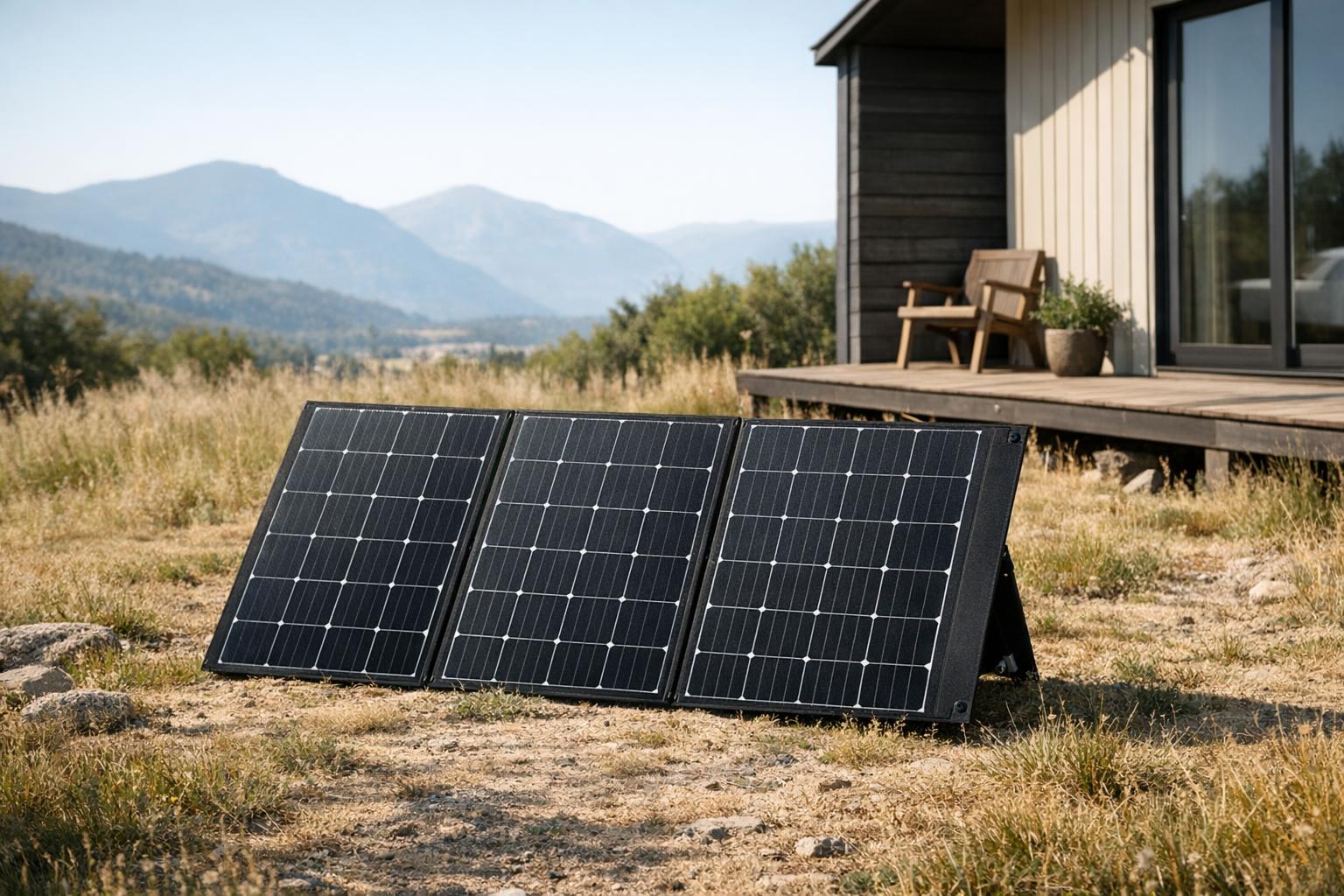
Ask where the next useful charge will come from. A wall outlet at home, a compatible solar panel at camp, and an approved vehicle charging accessory are not interchangeable promises. Check the exact charging method, cable supplied, optional accessories, and input restrictions in the manual. For example, the DELTA 3 Classic has separate instructions for wall, solar, and vehicle charging, including vehicle-starting precautions.[2]
For solar, the panel's advertised watts alone do not establish compatibility. The manufacturer's panel manual calls for checking electrical parameters against the receiving device's input range. Use our solar compatibility checklist before paying for an attractive bundle. Budget a poor-sunlight scenario too; the same manual explains that weak sunlight and shading reduce output.[7]
Make portability and controls part of the decision
Check the complete carrying burden: power station, charging cables, panels, and any extra battery. Measure the shelf, vehicle space, and walking route you intend to use. A handle is not evidence that your household can comfortably lift the unit. If possible, assess the published dimensions and weight against something you already carry, without pretending that is a hands-on product test.
Decide which settings must remain usable without internet access. Review output switches, the display, local controls, and the manual's explanation of app dependence. EcoFlow documents local Bluetooth management for the DELTA 3 when Wi-Fi is unavailable, but that does not establish the same capability for every product. Write down essential settings rather than relying on an unfamiliar app during an outage.[5]
Apply a final pass-or-fail checklist
Before ordering, confirm that the exact US model has the needed outlets, documented power capability, acceptable carrying weight, a supported recharge path, and a storage routine you can maintain. Confirm any required accessory by model number. Check the return terms and warranty separately from the technical specification; neither a long warranty nor an impressive capacity resolves a mismatch with your load.
Finally, read the placement and safety sections. NFPA warns that damaged batteries and improper use, charging, or storage increase fire and explosion risk. Battery-powered does not mean suitable for every indoor spot or outdoor condition. Select a location permitted by the exact manual, keep required ventilation clear, and reject a plan that depends on operating damaged equipment. The right purchase is the one whose constraints your household can actually follow.[3]