
Goal Zero Yeti 700 + Boulder 100
6.4Fair · out of 10$989.95 -10% List price- Portable power stations
Product images: Amazon listings
The Goal Zero Yeti 700 + Boulder 100 is a power station built around long-life LiFePO4 cells. It makes most sense for a quiet backup for the essentials; we rate it 6.4/10 from its listing.
| Brand | Goal Zero |
|---|---|
| Category | Portable power stations |
| ASIN | B0CZG6N5R3 |
Full listing title: Goal Zero Yeti 700 Power Station + Boulder 100 Solar Generator Bundle
Rated from the listing's specs, no buyer reviews yet
What it's made for: a quiet backup for the essentials.

The two power stations closest to it on our rating, with a dated price.

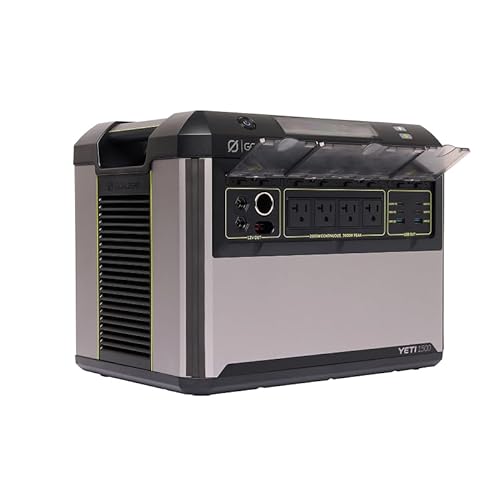
The seller states, word for word, in the Goal Zero Yeti 700 + Boulder 100 listing:
677 Watt Hour LiFePO4 battery provides reliable portable power for your outdoor adventures, emergency backup, and off-grid activities.
Includes Boulder 100 briefcase solar panel for sustainable charging capabilities, allowing you to harness solar energy for continuous power supply.
Their words and their figures.

The button opens the exact listing (ASIN B0CZG6N5R3), where today's price, stock and seller apply.

Want it to take over on its own? The BLUETTI AC180 (9.4/10) names a UPS mode (20 ms).
Want the panel in the same box? The Jackery Explorer 1000 v2 + 200W Panel (9.3/10) comes as a kit, station and panel matched by the seller.
Our take
The best thing about the Goal Zero Yeti 700 + Boulder 100 is long-life LiFePO4 cells. No buyer reviews yet, so the Goal Zero Yeti 700 + Boulder 100 has to win you over on paper. The one thing that bugs us: no word on the continuous output or the battery capacity. We'd pick it if you care more about battery life than about shaving off a pound; otherwise, put it next to the VTOMAN Jump 600X first.
Charge it to full from the wall, then plug in a lamp and one thing you really rely on, so you know how it behaves before you need it.
Move the essentials from the wall to the station, the fridge first. Watch the percentage for the first hour; it tells you more about your real runtime than any chart.
It refills from the wall between outages. Know how you would top it up if the grid stays down for days.
Store it at the charge level the manual recommends and top it up every few months. LiFePO4 cells are relaxed about this, but every battery slowly self-discharges. Our storage guide has the routine.
One thing to settle before the Goal Zero Yeti 700 + Boulder 100 ships: check the capacity and the output, because the listing we read gives no clear watt-hours or continuous watts, so ask for both before you plan around it.
Write down what has to run at the same time and for how long, then let our runtime calculator do the sums.
Anything with a compressor or a motor pulls a short spike when it starts; our refrigerator guide shows how to check a fridge or a freezer.
Plan how you refill it in a long outage: the wall when power returns, panels, or the car. Our solar panel compatibility guide covers plugs and voltages.
A battery station gives off no exhaust, so it can sit indoors within the temperature range its manual gives. Our storage guide has a simple routine for the months between outages.
How the Goal Zero Yeti 700 + Boulder 100 stacks up against the closest alternative, the VTOMAN Jump 600X.
| Criterion | Goal Zero Yeti 700 + Boulder 100 | VTOMAN Jump 600X |
|---|---|---|
| Our rating | 6.4/10 | 6.8/10 |
| Continuous output | Not stated | 600 W |
| Wall charge to 80 % | Not stated | 50 min |
Pick the VTOMAN Jump 600X if you want our higher-rated option (6.8/10), with more continuous output (600 W) and a faster wall charge (80 % in 50 min).
We rate it 6.4/10 (fair). The rating comes from its documented listing alone, as no customer-review record is captured yet.
Its listing states a LiFePO4 battery. These are the seller's figures; how long it really lasts on your fridge and how loud the fan gets under load can't be read from a listing.
Your load list: write down what has to run at the same time and for how long, then let our runtime calculator do the sums. The start-up spike: anything with a compressor or a motor pulls a short spike when it starts; our refrigerator guide shows how to check a fridge or a freezer. How you will recharge: plan how you refill it in a long outage: the wall when power returns, panels, or the car. Our solar panel compatibility guide covers plugs and voltages. Where it lives: a battery station gives off no exhaust, so it can sit indoors within the temperature range its manual gives. Our storage guide has a simple routine for the months between outages.
We link to the exact listing on Amazon, where today's price, stock and seller apply. It is an affiliate link, and it has no effect on the rating.