
Goal Zero Nomad 100
6.7Good · out of 10See current price ↗- Stated: 100 W panel
- Solar panels
Product images: Amazon listings
We like the Goal Zero Nomad 100 for the mix: a 100 W rating and 10 lb to carry. A good match for a long outage with sun in the forecast, rated 6.7/10 on its documented specs.
| Brand | Goal Zero |
|---|---|
| Category | Solar panels |
| Panel rating | 100 W |
| Panel weight | 10 lb |
| ASIN | B016UQNGFS |
Full listing title: Goal Zero Nomad 100 Watt Monocrystalline Portable Solar Panel
Rated from the listing's specs, no buyer reviews yet
What it's made for: a long outage with sun in the forecast.
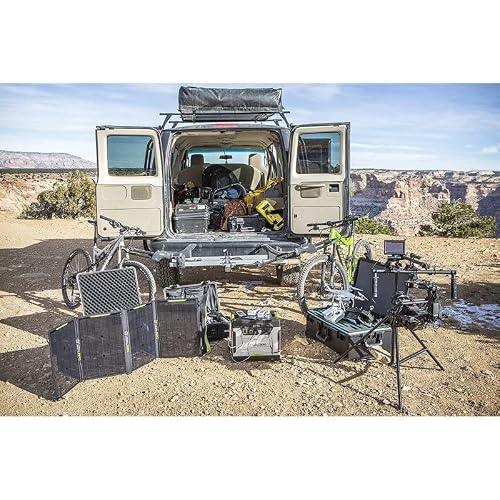
The two solar panels closest to it on our rating, with a dated price.

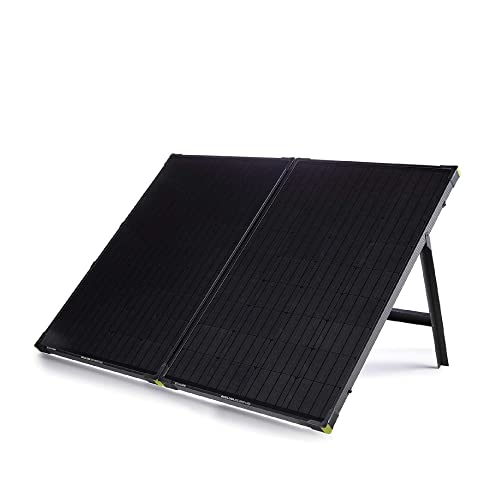
The rated output in ideal sun, per the listing. On a real day expect less: heat, haze and the angle all take their share.
What it has going for it
100 W panel. 100 W is the rating in ideal sun. Good for a small station, phones and lights; a big station wants several.
10 lb. That is what you carry from the car to the sunny spot, and back again when the shade moves.
At the campsite, 10 lb folds into the trunk with the rest of the gear.
In the backyard, 100 W keeps a small station topped up between outages.
The seller states, word for word, in the Goal Zero Nomad 100 listing:
100 watt (18-22v) foldable and Weatherproof Solar panel.
Features an 8mm Goal Zero connector for plug and play adaptability to Goal Zero Yeti power stations.
Folds down to 20" X 15" X 2" In a compact portable size.
Big wattage, Chainable, and weighs only 10 lbs.
Their words and their figures.

We have no recent price on file for this listing, so we don't print an old one.
The button opens the exact listing (ASIN B016UQNGFS), where today's price, stock and seller apply.

Feeding a big station? The Jackery SolarSaga 200W (7.6/10) is rated 200 W.
Hiking it to the sun? The Jackery SolarSaga 100W Air (7.5/10) weighs 7 lb, per its listing.
Weather a worry? The Renogy 100W Solar Panel with USB-C (7.6/10) states IP65.
Our take
We like the Goal Zero Nomad 100 for a 100 W rating and 10 lb to carry. No buyer has reviewed it yet, so our 6.7/10 comes from the spec sheet alone. Where it falls short: no word on the connector or the weather rating. We'd pick it if you need a light panel for a small station; otherwise, put it next to the EcoFlow 160W Solar Panel first.
Unfold it and face it to the sun, connect it to the station and check the input reading. If you are around, turn it with the sun every couple of hours.
Fold it dry, and the 10 lb go back in the car.
Before you order the Goal Zero Nomad 100: check the connector, because the listing does not name its plug, and your station's solar input has to accept it at 100 W.
Take a photo of your station's solar input and its label, and compare the plug and the voltage window with the listing. Our solar panel compatibility guide lists what to compare.
100 W of panel only help up to the input ceiling of your station. Look that figure up before you buy a second panel.
Full sun, facing south in the US, angled to the sun and clear of shade. Even a branch across one corner cuts the output noticeably.
How the Goal Zero Nomad 100 stacks up against the closest alternative, the EcoFlow 160W Solar Panel.
| Criterion | Goal Zero Nomad 100 | EcoFlow 160W Solar Panel |
|---|---|---|
| Our rating | 6.7/10 | 6.7/10 |
| Rating | 100 W | 160 W |
| Efficiency | Not stated | 25 % |
| Weather rating | Not stated | IP68 |
| Weight | 10 lb | 12.3 lb |
Both score 6.7/10. The EcoFlow 160W Solar Panel adds more watts (160 W) and higher efficiency (25 %), while the Goal Zero Nomad 100 brings less weight (10 lb).
We rate it 6.7/10 (good). The rating comes from its documented listing alone, as no customer-review record is captured yet.
Only if your power station manual says so. Check the connector, the input voltage and current limits, the list of supported models and any adapter the manual asks for; the same brand name on both boxes does not prove a fit.
Its listing states 100 W of panel power and 10 lb to carry. These are the seller's figures; what it really delivers on your roof or at your campsite depends on sun, angle and heat.
Match the plug and the voltage: take a photo of your station's solar input and its label, and compare the plug and the voltage window with the listing. Our solar panel compatibility guide lists what to compare. Your station's solar limit: 100 W of panel only help up to the input ceiling of your station. Look that figure up before you buy a second panel. Where it will sit: full sun, facing south in the US, angled to the sun and clear of shade. Even a branch across one corner cuts the output noticeably.
We link to the exact listing on Amazon, where today's price, stock and seller apply. It is an affiliate link, and it has no effect on the rating.